The Reason Every Photo of Your Event Looks Dull (Even With a Great Photographer)
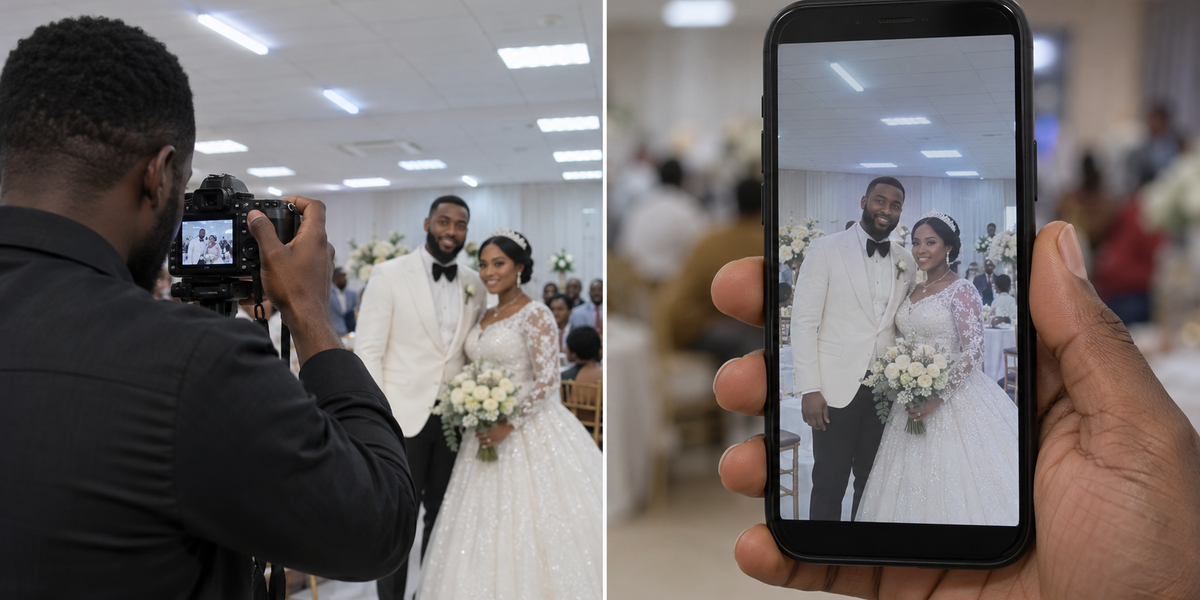
The photos from your event are back, and they don’t look the way the night felt. Dark in the corners, flat on the faces.
So what really decides how event photos turn out: a good photographer, or a good camera?
Both help. But there’s a third factor most people never think about, and neither of them can work without it: the lighting in the room.
A camera doesn’t capture how a room felt. It only captures the light that’s there. Most event venues are lit with cool-white overhead lights built to help people see, not to make anything look good. Every surface gets the same flat, directionless light, so nothing has depth, warmth or drama. That’s exactly what shows up in the photos.
Photos look warm and alive when the room has warm light (around 2700K to 3000K) from several sources at different heights: a chandelier or droplights overhead, spotlights on the key moments, softer light at eye level. If your venue doesn’t have that, you can add it. Below is what to look for, what to add, and what to ask your venue before the event.
Why Most Event Venues Photograph Flat
The best camera in the world can’t manufacture atmosphere that doesn’t exist in the room. Any serious photographer will tell you that, though they rarely say it when delivering your photos.
Atmosphere is made of light: the right kinds, in the right places, at the right colour temperature, creating the right depth.
At most Nigerian events, and most commercial events globally, the venue installs high-powered, cool-white overhead fluorescents or generic LED panels. They do their job. People can see their food, find their seats and move around the dance floor. But they flatten everything. Every surface gets the same harsh, directionless light, so there are no shadows and no depth. The camera captures exactly what’s there: a brightly lit room full of people. Not a story.
What Warm, Alive Event Photos Have in Common
The photos you screenshot and send to your planner with “I want this vibe” almost always share the same three things:
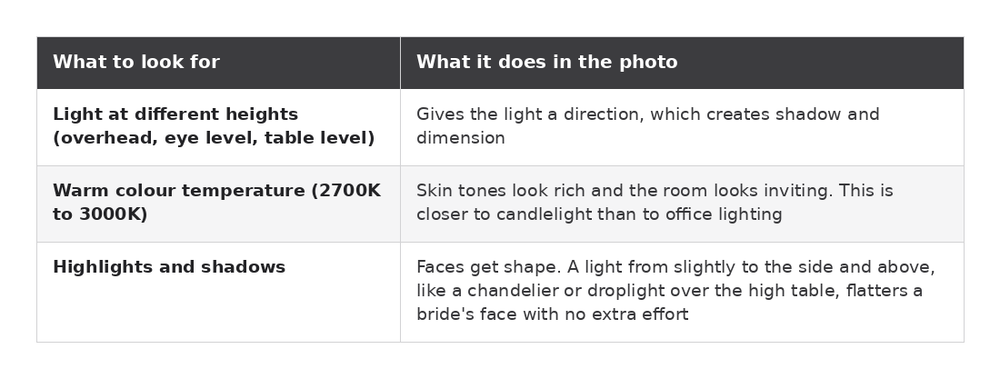
That’s why candlelit dinners became a cliché. Warm light genuinely works on the human eye and on the camera sensor.
The Lighting That Changes What a Camera Captures
Four types of fixtures do most of the work:
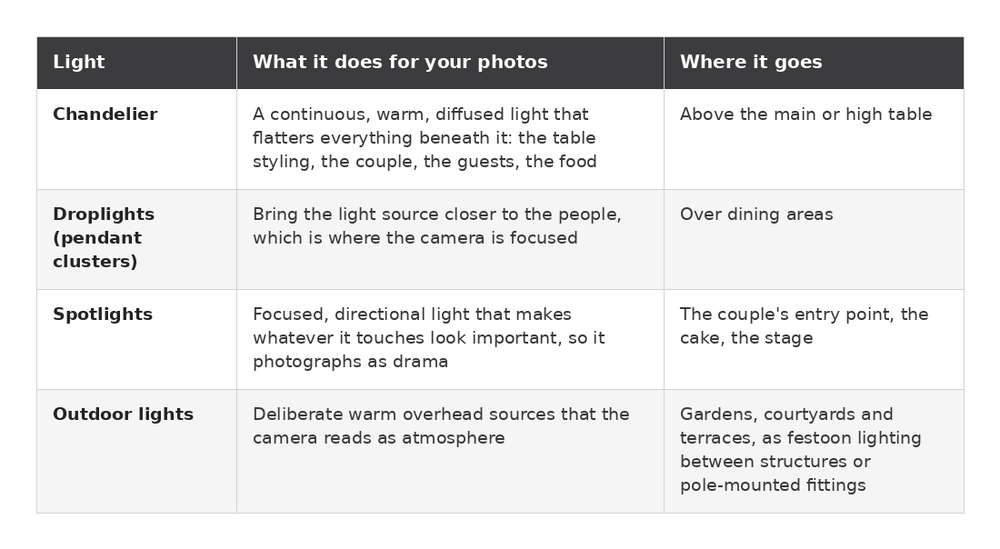
With a chandelier overhead, the camera doesn’t have to fight the light. It just receives it. Outdoor lighting is often an afterthought, with string lights used badly and a few path markers, but well-photographed outdoor events almost always have a deliberate warm canopy overhead.
What to Ask Your Venue Before You Book
Most clients ask, “Does the venue have lighting?” The question that matters is: “Can I control the lighting, and what types of fixtures are installed?”
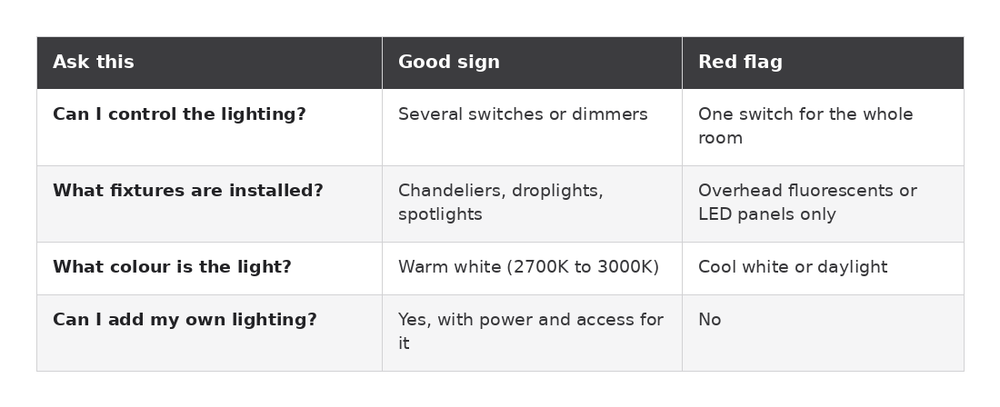
Cool-white, overhead-only, single-switch lighting means your photographer spends the night fighting the space. Warm, multi-source, layered lighting means they can focus on the moments.
If your venue has none of this, which most don’t, event lighting stops being a nice-to-have and becomes one of the highest-return things you can invest in. It doesn’t only make the event look better on the night. It decides what survives it. The photos and videos are what you keep, what you share, and what become the story of the night.
Make the Lighting Decision Before the Event
The most talked-about events in Lagos, the ones where the photos circulate for days and everyone wants to know the planner, all have one thing in common that isn’t on any vendor list.
Someone decided the light wasn’t an afterthought. Someone understood that every photo taken that night would be a reflection of every source of light in the room. And someone made sure those sources were warm, layered, deliberate, and beautiful.
That’s not luck. That’s a decision made weeks before the event, when the budget was still being written.
Your guests will remember the feeling. Your camera will remember the light.